5 Supports for Inclusive Group Activities
Published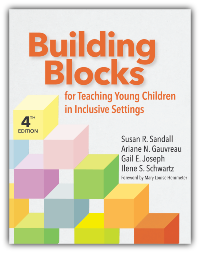 In inclusive early childhood classrooms, small-group activities are rich with opportunities for promoting communication, social connections, and problem solving skills for all young learners.
Excerpted and adapted from the fourth edition of Building Blocks for Teaching Young Children in Inclusive Settings, these support strategies will help you ensure that every child can participate in—and benefit from—your small-group instruction time.
Environmental Support
Alter the physical, social, and temporal environment to promote participation, engagement, and learning. For example:
- If a child grabs objects from others, add physical structure to the activity by putting the child’s project on a plastic tray or in a cardboard box lid. This way, the child has a reminder of which items are theirs and are relevant to the project.
- If a child has difficulty making the transition to small-group time, assign seats at the small-group table. Post the child’s name and photograph on the table or on their chair, or give the child a name card to take to small-group time.
- If a child has difficulty following directions, present only one step with the corresponding item at a time. Present another step only after the child has completed the first.
Materials Adaptation
Modify materials so that the child can participate as independently as possible. For example:
- If children are matching word cards to pictures of objects but a child’s arm movements move the cards out of their correct places, put Velcro on the back of the cards and the pictures. Let the child attach the cards and the pictures to a board.
- If the table is too high for a child, attach a foam board or cushion to the child’s seat by using Velcro or tape.
- If a child has difficulty holding a writing implement, wrap the tool with foam tape so it’s bigger and easier for the child to hold.
Activity Simplification
Simplify a complicated task by breaking it into smaller parts or by reducing the number of steps. For example:
- If a child has difficulty with puzzles or games that have lots of pieces, hand the pieces to the child one by one. You could also start with a completed puzzle and gradually increase the number of the pieces taken out.
- If a child is overwhelmed by the project the group is working on, make picture cards to illustrate the steps or parts of the activity.
Child Preferences
When you notice a child is not taking advantage of available opportunities, identify and integrate the child’s preferences. For example:
- If a child protests the activity and tries to leave the small group, let the child hold a favorite quiet toy during the activity.
- If a child is not willing to participate at small group, integrate a favorite item into the activity. For example, if a child loves trains, have them run a toy train through paint to create their artwork instead of using a paintbrush.
- If a child finishes the activity quickly and wants to leave, create “all done boxes” with motivating items inside that the child can use at the table after they finish the activity.
Adult and Peer Supports
During small-group activities, both adults and peers can support a child’s participation and learning. For example:
- If a child seems confused by the steps involved in a cutting and pasting activity and does not know where to start, have an adult sit beside the child and show them how to cut out a shape and glue it to the paper without telling them directly.
- If a child appears frustrated with the activity, an adult can provide encouragement by taking turns with the child.
- If a child has difficulty putting the last few pieces of a puzzle in the correct places, let another child who has put the puzzle together give clues about where the pieces go.
- If a child has difficulty opening a jar to get playdough or other materials out, pair the child with a peer who can hold the bottom of the container firmly on the table while the child takes off the cover.
Want more practical guidance and support strategies for teaching all young children in inclusive settings? Check out the fourth edition of Building Blocks, a trusted resource for proven, easy-to-use strategies that help all young children learn and participate.