
FAQ: Using AEPS-3 Cutoffs to Inform Eligibility
PublishedWhile the AEPS®-3 Test wasn’t specifically designed to determine a young child’s eligibility for services, it can be used as a valid source for helping programs determine eligibility. Today, AEPS-3 expert Naomi L. Rahn, Ph.D. (Associate Professor, University of Wisconsin-Whitewater College of Education and Professional Studies) is here to answer a frequently asked question:
How do you calculate scores for eligibility using the AEPS-3 cutoffs?
Naomi says:
There are three steps in using the AEPS-3 cutoff scores to help determine a child’s eligibility for early intervention or early childhood special education (ECSE) services:
- Determine the child’s chronological age in months.
- Calculate the child’s Area Goal Score for each developmental area (e.g., fine motor, gross motor, etc.).
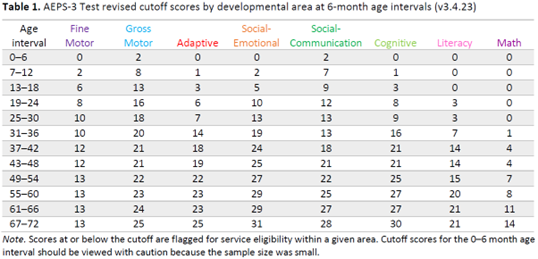
- Compare the child’s Area Goal Scores with the cutoff scores in each area in the cutoff score chart. A child may be eligible for services if the Area Goal Score is at or below the cutoff score for that area.
When your team uses the cutoff scores, there are three important things to keep in mind.
- First, gather information about the child from multiple sources to ensure an authentic and comprehensive picture of the child’s development. The cutoff scores are only one piece of information to help inform eligibility decisions.
- Second, involve family members and other caregivers. AEPS-3 includes the Family Report and Family Assessment of Child Skills (FACS), which offer ways for your team to meaningfully involve families in the assessment process.
- Third, confirm your state’s eligibility requirements. Many states require administration of a standardized, norm-referenced test and data from other sources. Using AEPS-3 in addition to a standardized test provides a comprehensive, authentic picture of the child’s skills and helps you develop IFSP outcomes or IEP goals.
Follow-up question: Do you add all the items (including the subitems) under the main goal?
No, you do not add all the items under the main goal. You calculate the Area Goal Score by adding only the child’s scores on the goals (see items circled in the AEPS-3 Child Observation Data Form below). You do not include the child’s scores on the objectives.
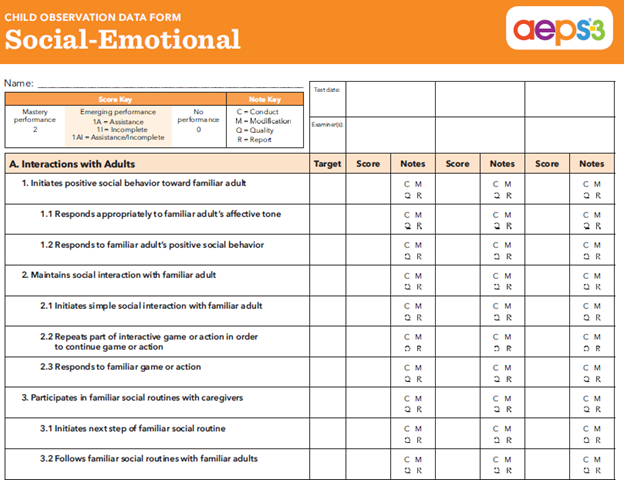
Let’s look at an example. A child is referred to your program for an evaluation. As part of your comprehensive evaluation process, your team administers AEPS-3 and the family completes the Family Report and FACS. Using the guidelines from your state, your team uses the AEPS-3 cutoff scores to inform eligibility for ECSE services.
- You calculate the child’s chronological age, which is 37 months.
- You calculate the Area Goal Score for each area. The child’s Area Goal Score for Fine Motor is 8.
- Using the cutoff score chart, you compare the child’s Area Goal Score to the cutoff score for Fine Motor for children in that age interval. The cutoff score in Fine Motor for children ages 37-42 months is 12. The child’s Area Goal Score is below the cutoff score, which means the child may be eligible for services in this area.
The AEPS-3 cutoff scores are a valuable tool to help inform your eligibility decisions. To learn more about the latest updates to the cutoff scores and how to use them, see Using Updated AEPS-3 Cutoff Scores to Determine Eligibility for IDEA Services.