8 Tips for Positive Colleague Relationships
Published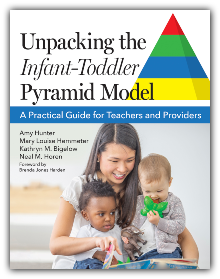 This article has been adapted from the book Unpacking the Infant–Toddler Pyramid Model, by Amy Hunter, Mary Louise Hemmeter, Kathryn M. Bigelow, & Neal M. Horen.
In early childhood programs, building positive relationships among colleagues will help improve the work you do together and lead to better outcomes for young children. If you’re an early childhood leader, coach, or consultant, use these recommended practices to support teaching teams in using positive, productive communication strategies that lead to a culture of caring, respect, and mutual responsibility.
Plan Opportunities to Get to Know Colleagues
Building a positive relationship requires effort and repeated opportunities. For example, have each team member fill out a “get-to-know-you” form with information that is interesting or unique to that person. Keep forms in a binder or folder that can be easily located to reference as desired. Teaching teams can also set aside a regular time to check in with one another or share celebrations (i.e., at the start of each day or the beginning of a weekly meeting). These regular check-ins give teaching teams an opportunity to show caring and interest in one another’s lives. (Be mindful of each person’s preferences for sharing personal information. Team members will likely have varying comfort levels with both sharing and receiving personal information.)
Develop an Inclusive Communication and Collaboration Plan
Have everyone complete a survey on work style. Each teacher completes the survey individually, and then the teaching team plans a time to meet together to discuss results. Discuss how each teacher’s preferred working style can be supported as well as how their preferences could contribute to the successful functioning of the classroom and to the care of individual children. Then develop a communication plan that works for all team members and ensures that everyone feels comfortable and included. Revisit this plan when a new member joins the team.
Communicate Positively
Simple things like a calm tone of voice, smiling at colleagues and children, making eye contact while communicating with others, saying “please” and “thank you,” and helping someone when they need something are all great ways to foster positivity. These interactions set the tone of the classroom environment. Keep in mind that knowing how an individual prefers to communicate and interact is critical for being able to express positivity and kindness in trauma-informed, culturally sensitive ways.
Model Kindness for Children
Children learn to be kind by watching adults’ interactions. Teaching teams can model kindness by using the simple positive communication strategies above, demonstrating specific social skills in front of children, and providing positive descriptive feedback to one another throughout the day.
Reflect Together on Collaboration and Conflict
To ensure productive collaboration, develop a plan for when and how to reflect on strategies that promote collaboration. Your team should also set aside dedicated time for talking about conflicts and missteps in the coworker relationship. When having conversations about teaming, practice a nonjudgmental stance, assume positive intent, and use “I” messages. Practice active listening with colleagues to ensure all voices are represented. Teachers should also have a set plan for who they can go to together to get support during a conflict, if needed.
Work Together on Classroom Guidance and Behavior Principles
There are four components educators should discuss and agree upon:
- reinforcing appropriate behavior and engagement
- equitably distributing attention
- responding to challenging situations
- identifying when a child may need additional support
Discussions around these four components should happen at the beginning of the year and periodically afterward to address the rapidly changing developmental needs of infants and toddlers. Develop a plan for addressing these components that can be revisited as needed.
Create a Roles and Responsibilities Table
Develop matrices as a team to purposefully plan for implementation of high-quality practices and outline adult roles. Roles and responsibilities matrices provide a structure for teachers to openly discuss one another’s strengths and preferences related to activities and routines throughout the classroom day. They’re also helpful for identifying times during the day when children may benefit from individualized support or targeted instruction. Plan who will deliver that instruction and what objectives can be targeted.
Support Others as a Team
Teaching teams should come together to collaborate with families and other professionals on a child’s support team. All team members should be aware of the child’s goals and the strategies being used in the classroom to address the child’s goals. As a team, make a plan to communicate regularly about the child’s progress and how the instructional strategies are working. This collaboration promotes continuity of care for each child and a more positive impact on learning and progress.
Educators often spend more time with their colleagues than they do with anyone else. Use these strategies to ensure that all team members develop positive relationships, feel valued and supported, and are on the same page about promoting children’s social-emotional development, behavior, and classroom supports.
Get more practical guidance in the book behind today’s post, Unpacking the Infant–Toddler Pyramid Model. See the book here!