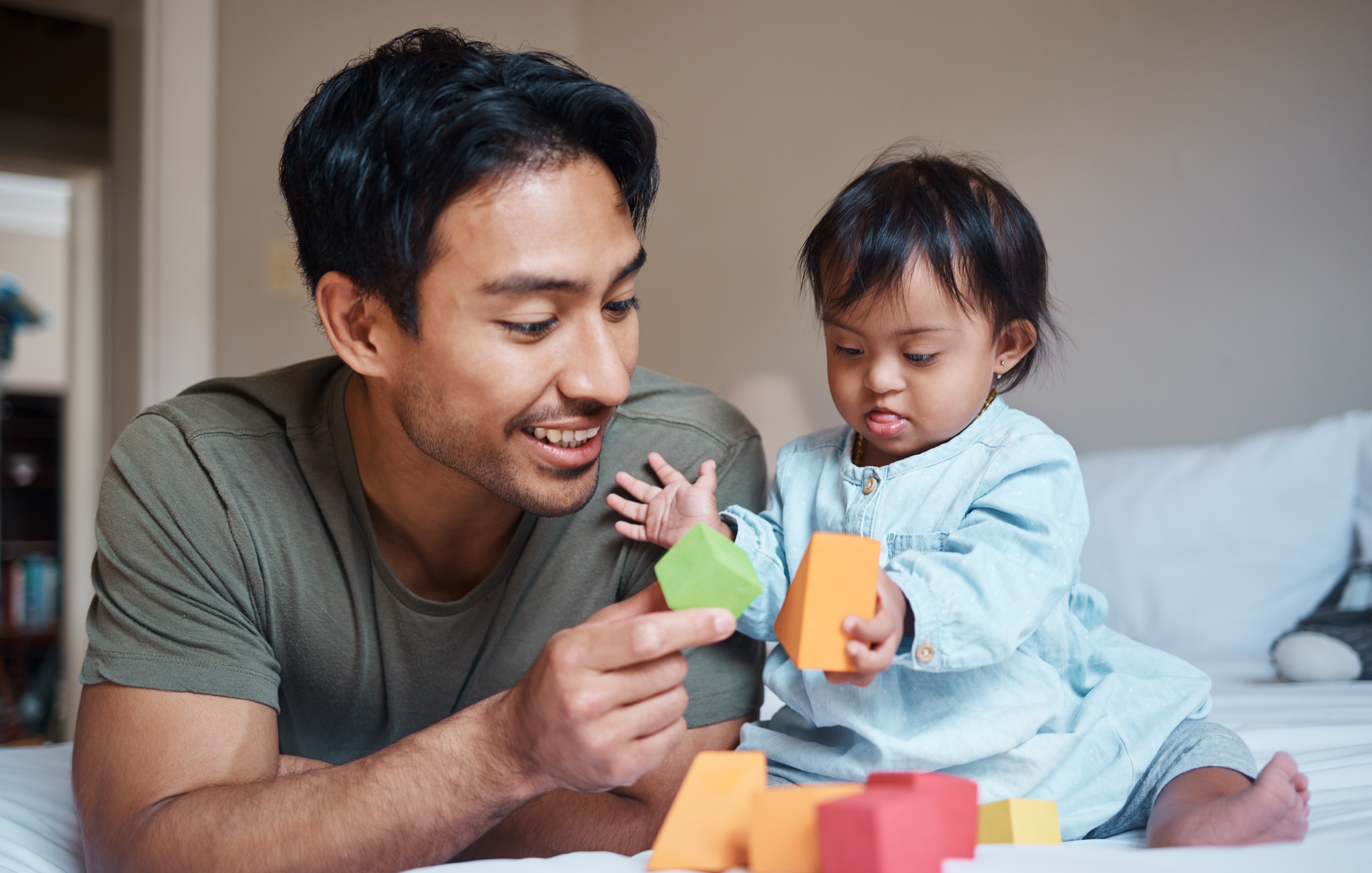
The ECL: An AEPS Success Story
PublishedHow does AEPS-3 help schools and families support young children’s development? Recently, we sat down with AEPS-3 co-developer Jennifer Grisham to talk about her important work as Faculty Director of the Early Childhood Laboratory, a campus-based program at the University of Kentucky that uses AEPS-3. Here, Dr. Grisham shares the school’s AEPS success story and outlines how the system benefits teachers, children, and families.
Q. First, could you tell us a bit about your work with the ECL?
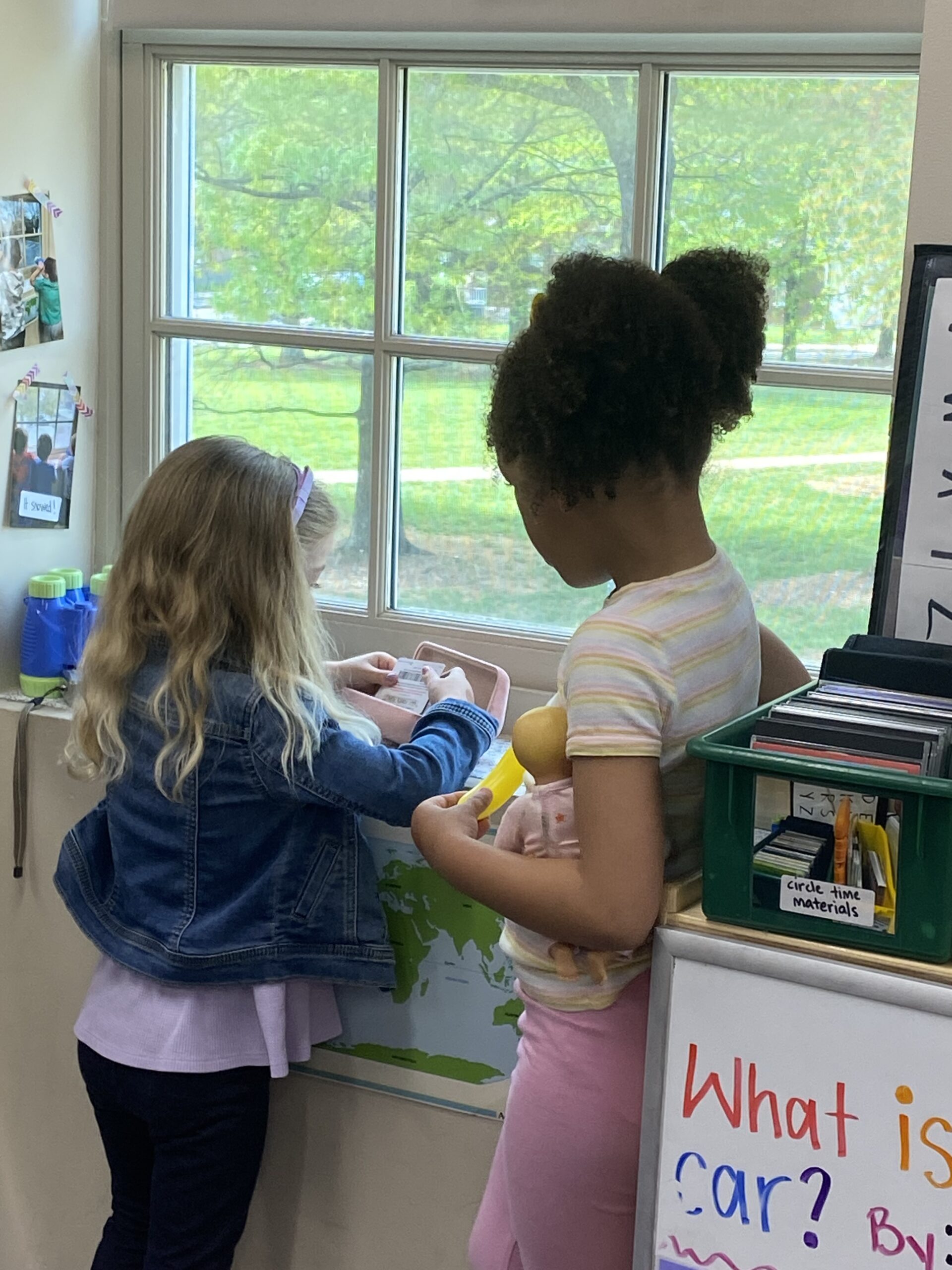
A. The Early Childhood Lab is an inclusive program for children with and without disabilities that are between the ages of birth and six years. All our teachers at the ECL are certified in interdisciplinary early childhood education, and most of them have a master’s degree. We also support graduate students who serve as our teaching assistants, and we provide them with a stipend and pay for their graduate education.
Our philosophy at the ECL is that all children can learn, and that they can learn within hands-on active play activities. We want to address the individual needs of our children and also their group needs. We actively involve our families, and we serve as a child care program for the campus and the community.
Our services for children with disabilities are provided by the local public school and by our early intervention programs. They don’t pull children out—instead, they offer an integrated therapy model where children are provided the services in the classrooms.
Q. Since the ECL uses AEPS-3, can you talk about why AEPS is such a great system to use for children with disabilities?
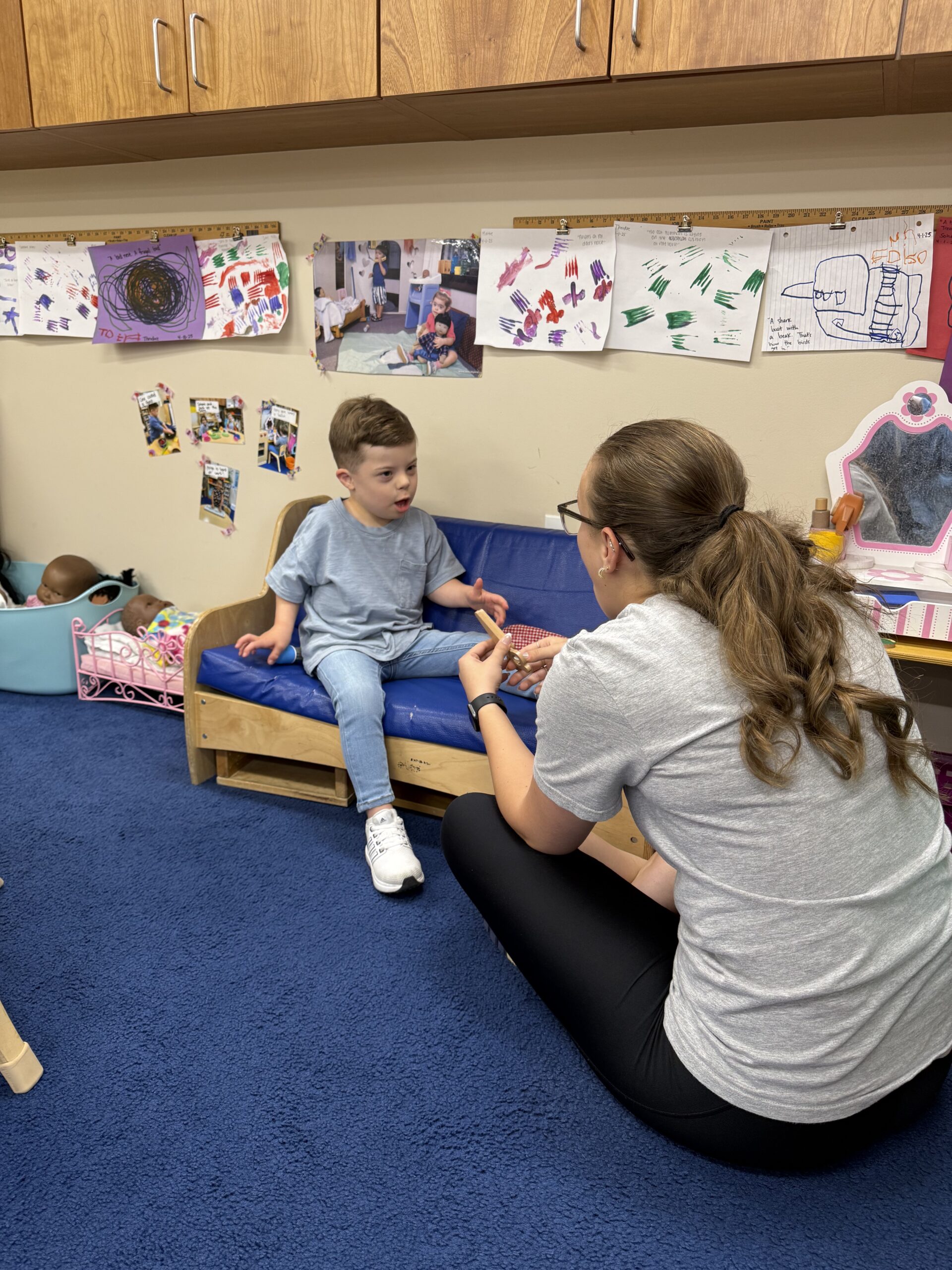
A. First, AEPS is sensitive to a child’s progress. For each goal, there are objectives that fall under it. If there are children who have not reached the goal, we can look at those earlier prerequisite skills to see what they are missing.
AEPS also allows for adaptations, accommodations, and modifications. If a child has a specific disability, we can modify AEPS items to allow children to perform the item in a different way. For example, if a child is using a wheelchair to move around the environment, we can still say that the child “walks avoiding obstacles,” because the child is performing the function of that skill: to be able to move around your environment.
Finally, within AEPS, we have something called foundation steps. These are even earlier skills than the objectives. These foundational steps can be used to task analyze a goal or objective for children with disabilities, especially those with more significant delays. We can use those foundational steps for teaching and goal development.
Q. Let’s talk about assessment: why is it important, and how has assessment with AEPS helped the ECL support children’s development?
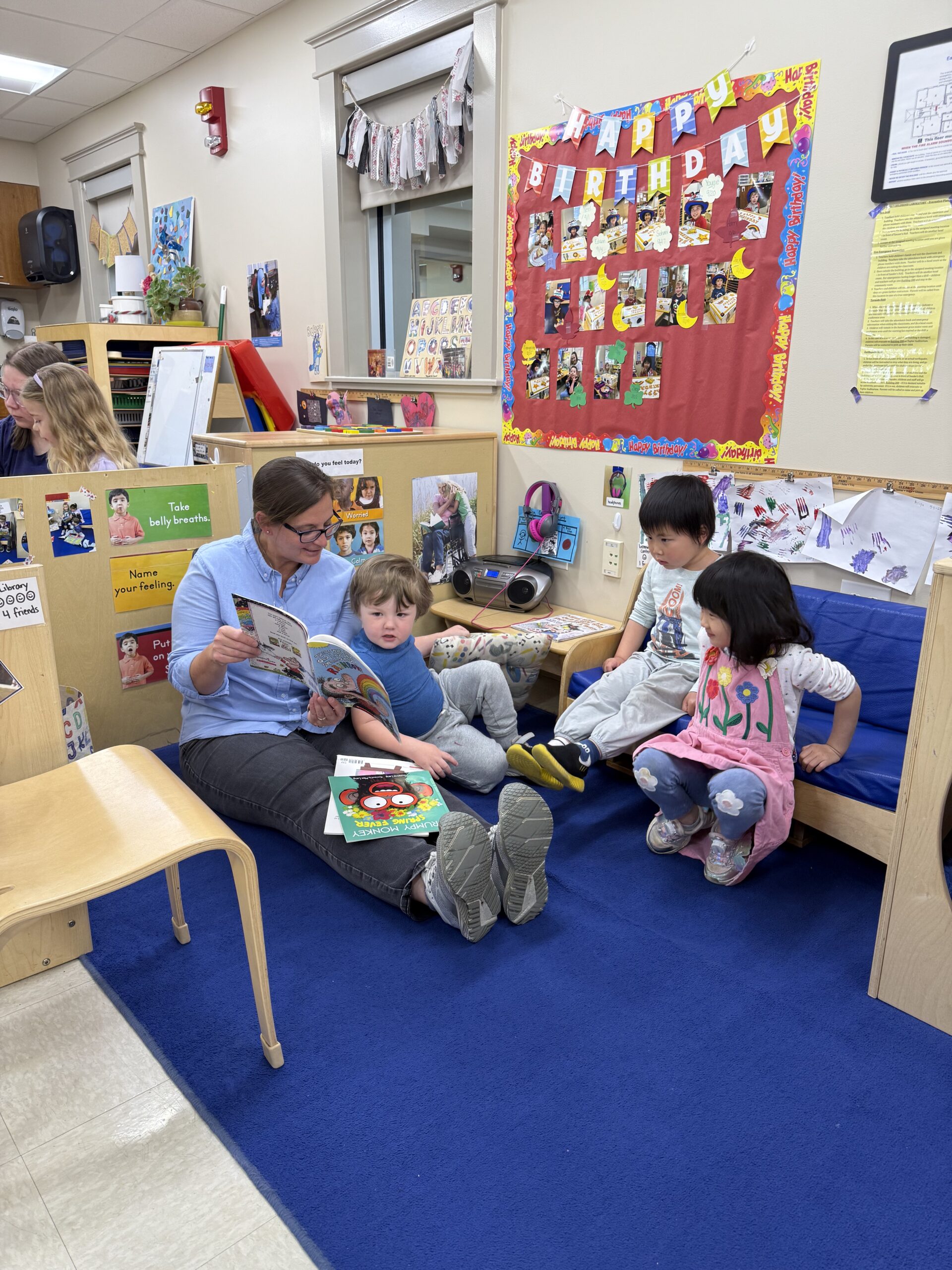
A. Assessment is important because it should guide everything we do with children. If you don’t have good assessment, you can’t have a good curriculum. Our teachers at the ECL will tell us that they don’t really feel like they’re teaching until after they complete AEPS, because AEPS helps guide their instruction. They identify those goals for children so that when they’re implementing activities, those activities have a specific purpose. Because there’s intentionality behind the activities, they know they’re meeting the goals of the children that they’re working with…
KEEP READING! Access the full interview on the Brookes Publishing blog.
Jennifer Grisham is a co-developer of AEPS and an early childhood consultant and trainer. This interview was completed prior to her retirement as Faculty Director of the Early Childhood Laboratory.